The academic year typically runs from early September to early June.
There are two main semesters:
- First semester: begins in September, ends around late January.
- Second semester: starts in late January, ends in early June.
After each semester there is a period for ordinary exams (or “first call”) soon after the teaching ends. There is also a second/opportunity call for exams (“second call”) later, typically in June or July.
Holidays & Breaks:
- The university calendar includes breaks around Christmas (roughly late December to early January) and Easter / Holy Week (spring).
- Other non-lective periods include national, regional, or local holidays, and specific festivity days such as the patron saint of UVigo (San Tomás de Aquino).
- The period just before classes start in September may include “non-teaching academic activities” (orientation, administrative tasks, etc.). Likewise, after the official academic end (in June), there might be non-lective activity or exam-related deadlines.
The University of Vigo (UVigo) is a young and dynamic public university in Galicia, Spain, known for its innovative spirit and strong international focus. UVigo offers a wide range of undergraduate, master’s and doctoral programmes in fields such as engineering, sciences, arts, business and social studies. It stands out for its research excellence, particularly in areas like marine sciences, technology and sustainability. Every year, the university welcomes hundreds of Erasmus and international students, offering them modern facilities, a vibrant campus life and the chance to experience the rich culture of Galicia.
Admission to Universidade de Vigo is open to students who hold a secondary education qualification equivalent to the Spanish Bachillerato or fulfil other legal access routes (e.g. vocational training, tests for mature students). More info here.
International applicants must have their qualifications homologated or recognised, and if required, take the Specific Competency Tests (PCE) via UNED to reach the required entry mark. For master’s and doctoral programmes, applicants need to submit degree certificates, transcripts, sometimes proof of language ability, and in case of foreign degrees, legalisation or equivalence.
The University of Vigo (UVigo) maintains a flexible yet structured language policy for incoming students, including those participating in Erasmus and other exchange programmes.
The UVigo does not impose a formal language requirement for incoming students. However, proficiency in the language of instruction is highly recommended. Courses are predominantly taught in Spanish or Galician, with some faculties offering courses in English or "English-friendly" formats. For instance, the Faculty of Marine Sciences provides English-friendly courses where instructors accommodate English-speaking students by offering English-language materials and conducting tutorials in English upon request.
The UVigo offers language support through its Language Centre (Centro de Linguas), which provides Spanish as a Foreign Language courses at a reduced fee for exchange students. Additionally, the Galician Language Standardisation Service (Área de Normalización Lingüística) offers free 40-hour courses on Galician language and culture for foreign students. These language courses are designed to enhance students' linguistic skills and cultural understanding. Nevertheless, notice grades from these courses are not reflected in the students' official transcript of records.
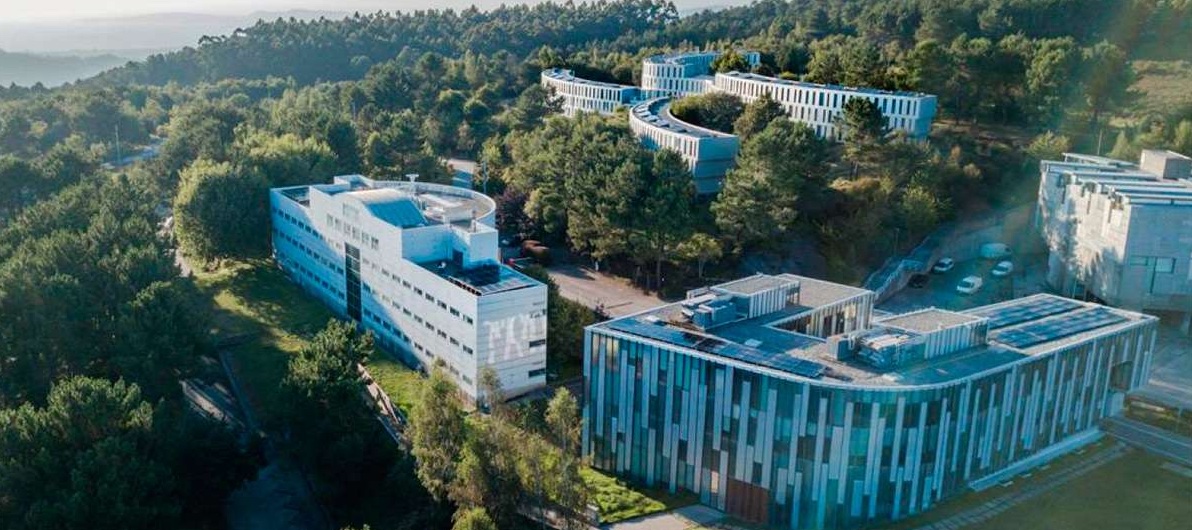
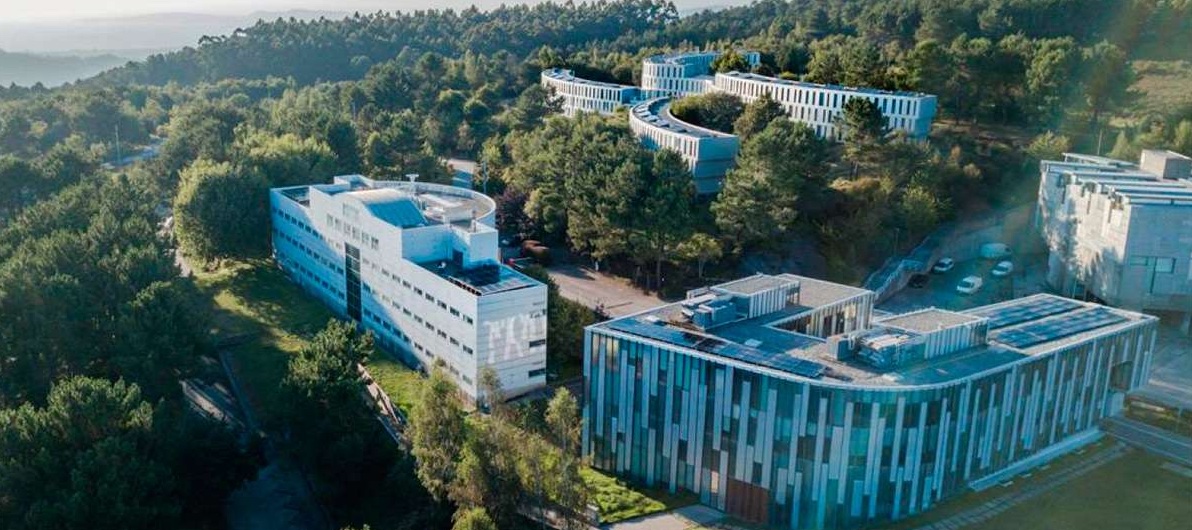
The University of Vigo is spread across three main campuses, each with its own focus and atmosphere. The three campuses provide students with diverse learning opportunities, vibrant campus life, and access to cutting-edge resources across different disciplines.
The University of Vigo organizes its teaching and research through a network of faculties, schools, and institutes grouped by knowledge areas.
- In Engineering and Technology, it includes faculties of Telecommunications, Industrial Engineering, and Computer Science.
- Sciences and Health encompass Biology, Environmental Sciences, and the School of Nursing.
- Arts, Humanities, and Social Sciences cover faculties of Fine Arts, Education, Philosophy, and Social Sciences.
- The Business and Economics area includes Management, Economics, and Tourism programs.
This structure allows students to benefit from specialized facilities, interdisciplinary collaboration, and expert faculty within each field, while fostering a dynamic academic community across all campuses.
If you are a student from another university wishing to study or train at the University of Vigo under an exchange programme, you are considered an incoming mobility student.
General regulations and procedures:
- Incoming students must be officially nominated by their home university within the deadlines published by the University of Vigo.
- Once nominated, students will receive detailed instructions on how to complete the online application and prepare their Learning Agreement.
- Admission depends on the existence of a valid inter-institutional agreement between the University of Vigo and the home institution.
- Students are expected to comply with all academic and administrative regulations of the University of Vigo during their stay.
- Exchange students are expected to enroll in a minimum of 10 ECTS per semester and a maximum of 60 ECTS per year.
- At the end of the mobility period, the University of Vigo will issue an official Transcript of Records and, if applicable, a Certificate of Attendance.
Recommendations:
- Application deadlines and nomination procedure available here.
- Check the Mobility Coordinators available at each organizational unit.
- Check the courses available in the Catalogue section of this site.
- Practical information also available in the Resources and Services section of this site: accommodation, visas, language courses, student services
If you are a University of Vigo student wishing to study or undertake a traineeship at one of our partner institutions abroad, you are considered an outgoing mobility student.
General regulations and procedures:
- Outgoing mobility must take place within the framework of an existing bilateral or inter-institutional agreement (Erasmus+, ISEP, bilateral agreements, etc.).
- Students must apply through the University of Vigo’s internal mobility calls and follow the specific deadlines and procedures set by their Faculty International Office.
- Selected students must sign a Learning Agreement (for studies or traineeships) approved by their academic coordinator before departure.
- Recognition of studies or traineeships abroad will be guaranteed, provided the activities are completed as stated in the approved Learning Agreement.
- All outgoing students must complete pre-departure, during, and post-mobility formalities, including documentation submission and participation in mandatory information sessions.
Recommendations:
- Further information is available here.
- Check mobility calls and deadlines
- Get learning Agreement templates
- Check contact information for International Officers available at your Organisational Unit and Programme.
The recognition of credit mobility and prior learning is regulated through national legislation and the university’s internal academic regulations, ensuring that learning achieved in other institutions or contexts can be formally recognised within a student’s degree programme.
The recognition of prior learning and previous studies credits obtained in other official university programmes in Spain or abroad, provided that the learning outcomes and academic level are comparable. Recognition requests are evaluated by the relevant faculty or academic committee, which analyses course content, workload, and competencies before granting equivalence.
Students may also request recognition for professional or work experience related to the degree field. In such cases, recognition is limited to a percentage of the total credits in the programme, in accordance with Spanish national regulations such as Real Decreto 822/2021. Normally, these recognised credits cannot be used for core final projects (such as the bachelor’s or master’s thesis).
Academic guidance for students is provided through a coordinated system of institutional services, faculty structures, and academic staff, aimed at supporting students throughout their studies and facilitating their academic progress.
Each faculty or school appoints academic coordinators and tutors who provide guidance on study plans, course selection, and academic progression. These tutors help students understand programme requirements, select appropriate subjects, and address academic difficulties that may arise during the academic year.
In addition, the university offers orientation and advisory services through specialised support units. These services provide information and counselling on academic planning, study strategies, and decision-making related to academic pathways. They also support students during key transition stages, such as the beginning of university studies or preparation for professional careers.
International and mobility students receive additional support through the International Relations Office of the Universidade de Vigo, which provides guidance on academic procedures, learning agreements, and course selection before and during their mobility period.
Before the mobility period begins, the student prepares a Learning Agreement in coordination with the academic mobility coordinator at their faculty and the host institution. This document specifies the courses to be taken abroad and their equivalence within the student’s study programme at the Universidade de Vigo. The agreement ensures that the academic activities completed during the exchange are pre-approved for recognition.
During the mobility period, any necessary modifications to the study plan must be formalised through a Learning Agreement During the Mobility, which must be approved by both institutions.
After completing the exchange, the host university issues a Transcript of Records indicating the courses completed and the grades obtained. The International Relations Office and the relevant faculty then verify the transcript and proceed with the recognition and transfer of credits into the student’s academic record. Credits are recognised according to the European Credit Transfer and Accumulation System (ECTS) and based on the equivalences established in the approved Learning Agreement.
The admission of full-degree international students follows the general regulations governing higher education in Spain, together with the university’s own academic procedures.
For undergraduate programmes (Grado), admission is managed through the regional university admission system coordinated by the Comisión Interuniversitaria de Galicia (CIUG). Applicants must hold a secondary school qualification that grants access to university studies in their home country. International students usually need their qualifications to be recognised through the Spanish system, often via evaluation by UNEDasiss or through recognition by the Ministerio de Educación y Formación Profesional de España. Places are allocated competitively according to the student’s admission grade and the number of places available in each programme.
For official master’s programmes, applicants must hold a recognised bachelor’s degree or equivalent qualification that allows access to postgraduate studies. Applications are submitted directly to the university, and admission decisions are made by the academic committee of each programme based on criteria such as academic background, relevance of previous studies, and, where required, language proficiency.
Admission to doctoral programmes is regulated nationally under Real Decreto 99/2011. Candidates normally need a bachelor’s and master’s degree (or an equivalent qualification totalling at least 300 ECTS credits). Applicants must also submit a research proposal and obtain approval from the academic committee of the selected doctoral programme.
Across all levels of study, students must meet the language requirements of the programme (Spanish, Galician, or English) and, for non-EU applicants, complete the relevant visa and immigration procedures before beginning their studies in Spain.
Once a student has been formally admitted to a full-degree programme (bachelor’s, master’s, or doctoral studies), they must complete the registration (matrícula) process to officially enrol and obtain student status.
For undergraduate students, registration follows the allocation of a place through the system coordinated by the Comisión Interuniversitaria de Galicia (CIUG). O
In all cases, registration is only considered complete once the student has submitted the required documentation and paid the relevant fees in accordance with the regulations governing public universities in Spain, including those derived from Real Decreto 822/2021. After registration, students receive full access to university services, including the student card, digital platforms, and academic support services.
The admission of exchange students is based on institutional cooperation agreements and follows the regulations governing international mobility programmes.
Unlike full-degree students, exchange students are not required to pay tuition fees at the host institution, as they remain enrolled and pay fees at their home university according to the terms of the mobility agreement. Upon arrival, they must complete the registration process and attend orientation sessions organised by the International Relations Office.
Exchange students must be officially nominated by their home university, which must have an active bilateral agreement with the Universidade de Vigo or participate in recognised mobility frameworks such as the Erasmus+ Programme. Only students enrolled in a degree programme at their home institution and who meet the academic requirements defined in the agreement are eligible for nomination.
Once nominated, students must complete an online application within the deadlines established by the university. As part of the application process, they are required to submit documentation such as proof of enrolment at the home institution, an academic transcript, a copy of their passport or national ID, and a proposed Learning Agreement. This document outlines the courses the student plans to take during the exchange period and must be approved by both the sending and receiving institutions before the mobility begins.
Admission is granted once the application and supporting documentation have been reviewed and approved by the International Relations Office and the relevant academic coordinators. Exchange students must also demonstrate adequate language proficiency in the language of instruction (Spanish, Galician, or English, depending on the courses selected).
First, students must be officially enrolled in a higher education programme at their home institution at the time of nomination and during the mobility period. They should normally have completed at least the first year of undergraduate studies (or an equivalent level of study) before starting the exchange.
Secondly, the nominated student’s academic profile must be relevant to the field of study covered by the bilateral agreement with the Universidade de Vigo. This ensures that the courses selected during the exchange correspond to the student’s degree programme and that credits can later be recognised by the home institution.
Students are also expected to demonstrate satisfactory academic performance, typically reflected in their academic transcript and confirmed by the sending institution at the time of nomination.
Nominated students must have sufficient language competence in the language of instruction of the courses they intend to follow (Spanish, Galician, or English). The required level may vary depending on the faculty or programme.
Visiting students are students who wish to study at the university outside a formal exchange programme and without being enrolled in a full degree at the institution. Their admission is managed directly by the International Relations Office in coordination with the relevant faculty or school.
Applicants must normally be currently enrolled in a higher education institution in their home country or hold a qualification that allows access to university studies. As part of the application process, students submit documentation such as proof of enrolment at their home university, an academic transcript, identification documents, and a proposed list of courses they wish to follow during their stay.
The proposed study plan is reviewed by the appropriate academic unit to ensure that the selected courses are academically appropriate and available. If approved, the student receives an official letter of admission as a visiting student. Unlike exchange students, visiting students are usually required to pay tuition or administrative fees established by the university.
During their stay, visiting students may attend courses and receive a transcript of records at the end of the period, with credits expressed according to the European Credit Transfer and Accumulation System (ECTS). The recognition of these credits at the home institution remains the responsibility of that institution.
First, admitted students must confirm their acceptance of the offer and submit the required documentation, which usually includes identification (passport or national ID), proof of enrolment at their home university (if applicable), and their approved study plan or list of courses.
Once the documentation has been verified, students proceed with administrative registration (matrícula) through the university’s academic management system. During this step, they formally register for the selected courses and pay the corresponding tuition or administrative fees, as visiting students are not covered by exchange agreements and therefore must pay the applicable fees established by the university.
After completing registration, visiting students obtain access to the university’s digital services and academic platforms, including the institutional email account, the virtual learning environment, and other student services. They may also receive a temporary student identification card.